PVC vs PU Bumper Pads: Materials, Shapes and Applications for B2B Buyers
Choose between PVC and PU bumper pads by comparing the complete pad against the space and contact conditions in the application. Material, footprint, height, profile and attachment all belong in the specification. A polymer name alone does not establish cushioning performance, holding strength or suitability for a particular cabinet, door or furniture surface.
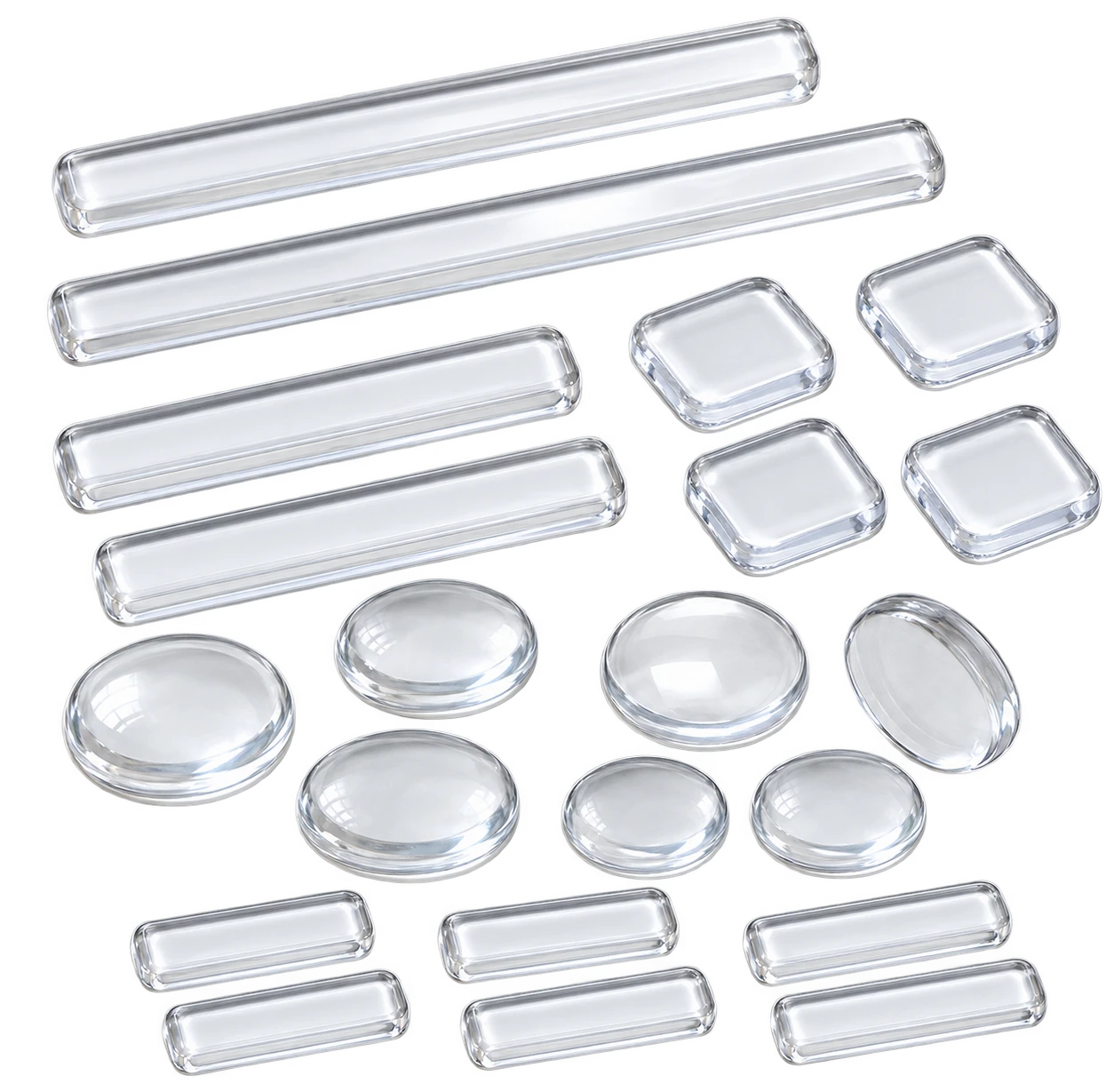
This guide compares the options listed in yiHom's PVC and PU ranges. It gives importers and furniture buyers a way to shortlist samples without assuming that all transparent bumper pads have the same construction or function.
Compare the two listed product families
The PVC bumper-pad range uses flexible PVC with acrylic adhesive. Transparent is the standard color; black can be customized and other colors are evaluated by project. Listed styles include hemisphere, flat, hollow and grid profiles, with existing dark round models shown in the gallery.
The PU bumper-pad range lists transparent PU at approximately Shore A 10, in round, square and strip forms. That hardness value is specific to the stated range. It is not a load rating, a service-life claim or evidence that every PU bumper has the same hardness.
| Detail | Listed PVC range | Listed PU range |
|---|---|---|
| Material | Flexible PVC | Transparent PU |
| Adhesive information | Acrylic adhesive | Confirm the adhesive or attachment specification for the selected item |
| Shape options | Hemisphere, flat, hollow, grid and shown dark round models | Round, square and strip forms |
| Hardness | Confirm for the selected model | Approximately Shore A 10 |
| Packaging examples | Blister packs, plastic boxes and paper cards | OPP bags and blister cards |
There is not enough confirmed information to rank these families by adhesion, cushioning or durability. Use the listed differences to select samples, then evaluate the exact construction for the application.
Start with the available space and contact point
Identify where the moving or resting part will contact the pad. Record the space available for its base and the gap or clearance that the finished assembly must maintain. Include photographs showing the contact point with the door, drawer or furniture part in its normal position.
A pad's unloaded height is not the same as its height under an applied load. If the working gap matters, ask for an evaluation under the intended conditions. Do not select solely by appearance or assume that the tallest pad will provide the best result.
For an elongated contact area, a strip may be a useful shape to evaluate. For a localized contact point, a round or square footprint may be a candidate. Those are selection approaches, not confirmed application ratings for individual models.
Use actual dimensions to shortlist PU samples
The current PU range provides the following dimensional starting points:
| Form | Listed dimensions |
|---|---|
| Round | Ø30 × 8 mm; Ø40 × 8 mm |
| Square | 42 × 42 × 9.5 mm |
| Short strip | 30 × 10 × 2.5 mm |
| Medium strip | 63 × 10 × 2.5 mm |
| Long strip | 152 × 15 × 3 mm |
Compare the full footprint and height with the available space. A strip's length alone is not enough to decide fit; its width and thickness also affect the assembly. Ask for a drawing if the orientation or dimensional notation is unclear.
For PVC profiles, use the selected model's specification image or request its dimensions. Record footprint and height for the exact profile; a family name such as “hemisphere” is not a complete dimensional specification.
Separate pads, sheets and retail packs in the inquiry
Bumper pads may be supplied in a layout rather than as individually packed pieces. yiHom lists custom die-cut layouts for PVC pads, including arrangements such as 3 × 2. State the number of pads per sheet, sheets per pack and required order unit.
For example, a 3 × 2 layout contains six pads. A proposed pack with four such sheets would contain 24 pads. This is a quantity calculation, not confirmation that the exact configuration is available for every size or shape.
For PU pads, confirm the selected layout and packaging along with the dimensions. A quotation in sheets cannot be compared directly with one in individual pads without knowing the pad count per sheet.
Keep the units visible in the purchasing record:
| Quantity field | Illustrative calculation |
|---|---|
| Pads per sheet | 3 × 2 layout = 6 pads |
| Sheets per retail pack | 4 sheets |
| Pads per retail pack | 6 × 4 = 24 pads |
| Comparison unit | Price per pack divided by 24 = price per pad, excluding any separately quoted costs |
These numbers illustrate the counting method, not a standard yiHom pack. Ask each supplier to quote the same pad, sheet and pack quantities before comparing prices.
Evaluate the pad in the intended assembly
Provide the surface material and finish, expected contact conditions and any cleaning exposure. Confirm installation guidance for the selected attachment. Avoid copying solvent, temperature or waiting-time instructions from another bumper product.
In a sample review, check location, clearance, appearance and retention. Record whether the door or furniture part reaches its intended position, whether contact changes the pad's shape, and whether the observed cushioning meets the agreed requirement. A quantified noise, load or durability claim needs a suitable test and supporting evidence.
Common selection questions
Are PU bumper pads always better than PVC?
The current product information does not support a universal ranking. The ranges have different listed shapes, dimensions and material details, but performance depends on the exact pad and application. Compare suitable samples using the same assembly conditions and agree on the criteria that matter to the buyer.
Can the shape and sheet layout be customized?
Both ranges list customization, with new molds evaluated for non-standard specifications. PVC includes size, shape and sheet-layout options; PU includes size, shape, color, hardness, layout and packaging. Send the proposed drawing, quantities and application so feasibility, tooling and timing can be confirmed for the project.
Keep the agreed profile, dimensions and sheet count in the OEM sample approval record. Review the PVC range and PU range, then send your bumper-pad application and dimensions for sample and quotation discussion.