How to Measure Chair and Table Legs for PVC Furniture Leg Caps
To select PVC furniture leg caps, measure the outside of the leg at the point the cap will cover. Record its shape, dimensions and any taper or angle, then confirm the fit with a sample. For B2B orders, a measurement sheet for each furniture model is more useful than a label such as “small” or “30 mm cap.”
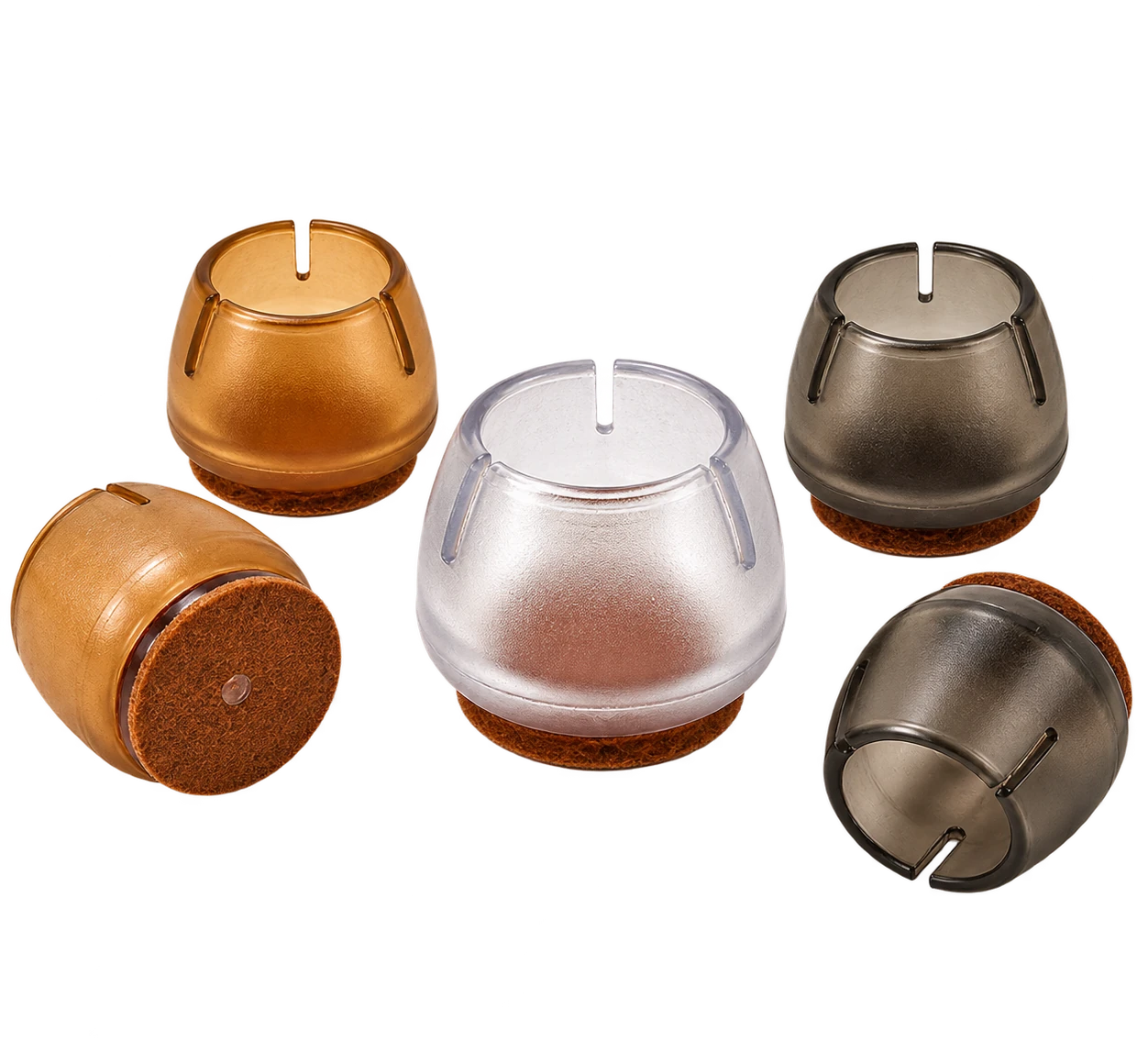
The yiHom PVC leg-cap range lists flexible PVC caps in 20 mm and 30 mm standard sizes. These catalog labels do not establish a universal fit range. Confirm the intended leg shape and dimensions before assigning either model to a furniture line.
Identify the cap type and measuring location
An external cap fits over the outside of a furniture leg. An insert fitted inside a hollow tube uses different dimensions. Check which type the furniture requires before using a measurement from an existing fitting.
For an external cap, measure the leg itself rather than the outside of an old cap. Record dimensions at the bottom and at the proposed upper fitting point if the leg tapers. Include the amount of leg that may be covered and any nearby brace, curve or obstruction.
Supplier Chair Caps Australia also presents leg shape and measurements in millimeters as the starting point for selection. Its product fit advice should not be transferred to yiHom caps; use the selected model and a sample to confirm fit.
Record dimensions for each shape
The supplier needs to know whether the cross-section is round, square, rectangular or irregular. Photograph the end of the leg and its side profile. Use one unit consistently, preferably millimeters, in the measurement sheet.
| Leg cross-section | What to record for an external cap |
|---|---|
| Round | Outside diameter at the bottom and intended upper fitting point |
| Square | Outside width across the faces, corner shape and taper |
| Rectangular | Both outside dimensions; do not record only the longer side |
| Oval or irregular | Major and minor dimensions, plus a drawing or end-view photograph |
| Angled or tapered | Bottom dimensions, dimensions higher on the leg and a side-view drawing |
For a square leg, identify whether the measurement is across the faces or across the corners. Those are different dimensions. For a rectangular leg, write both dimensions so the supplier does not need to infer the second side from a photograph.
Check more than one leg and furniture unit
Measure the parts that will receive the caps. If a chair uses different front and rear leg shapes, list them separately. If several furniture models are included, do not combine them under one nominal size before checking the differences.
For production furniture, request the furniture manufacturer's dimensional tolerances or observed range. Record that information as supplied rather than inventing an allowable range for the cap. A sample that fits one leg does not establish that it fits every unit in a batch.
Use one measurement record for each distinct leg shape. Copy these fields into your inquiry; enter measured values rather than selecting a cap size first.
| Measurement record | Buyer entry |
|---|---|
| Furniture model and leg position | Model code; front/rear or other position |
| Shape and finish | Round, square or other shape; surface finish |
| Dimensions at the bottom | Diameter or both outside dimensions, in mm |
| Dimensions at the upper fitting point | Dimensions in mm and height of that point above the bottom |
| Available coverage | Length of leg the cap may cover; nearby obstructions |
| Variation checked | Supplied tolerances or measurements from additional legs |
| Supporting views | End-view and side-view photo or drawing references |
| Requested configuration | Color, felt requirement and sample quantity |
For a tapered leg, label the two measurement positions on the side-view photo. Without those positions, two different diameter readings could look like a measurement error. For angled legs, include how the foot meets the floor so the supplier can review seating.
Decide the felt-bottom configuration separately
The current yiHom range lists transparent, black and amber brown PVC caps, with felt bottoms available. Stated felt thickness is approximately 0.3–0.5 mm. Confirm the chosen cap and felt configuration together, including the appearance and contact arrangement on the intended floor.
A felt-bottom option does not establish suitability for every fit or floor. Review whether the assembled cap seats as intended, stays aligned and presents the expected contact area. Include the relevant floor manufacturer's care recommendations in the sample brief.
Use a fit sample before assigning a standard size
Give the supplier the measurement sheet and request a suitable sample for evaluation. Review installation, seating, retention and removal where relevant. Agree on acceptable fit and appearance rather than using the word “tight” without defining the requirement.
Do not use an assumed stretching allowance for flexible PVC. The listed 20 mm and 30 mm sizes do not state a maximum leg diameter. For an unlisted shape or dimension, request a feasibility review instead of assuming that flexibility provides a fit.
yiHom lists customization of size, color, felt configuration and product structure. New molds can be developed for non-standard sizes, with quantity, tooling and timing confirmed for the project.
Questions to resolve before ordering
Can a round cap be used on a square leg?
Do not assume cross-shape compatibility from the nominal size. A square leg's corners and contact arrangement differ from a round leg. Send the actual dimensions and shape to the supplier and evaluate the proposed sample. Use the fitting combination confirmed for the selected cap.
Is a 30 mm cap correct for every leg measuring 30 mm?
No universal fit rule has been established for this range. Nominal cap size, measuring position, leg shape and tolerances need confirmation. Provide those details and review a fitting sample before ordering. Keep the approved model reference with the furniture measurement sheet for repeat orders.
Send a measurement-based inquiry
Include furniture models, leg dimensions, shapes, finish, cap color, felt requirement and target quantity. State the packaging requirement; listed options include blister cards, paper boxes and plastic boxes, subject to the order brief.
Review the PVC leg-cap options and request a fitting sample. For a non-standard structure, include the measurement sheet with your OEM customization inquiry. Keep the accepted cap model and fit results in your sample approval record.