PTFE Furniture Glides vs Felt Pads: A B2B Selection Guide
Choosing between PTFE furniture glides and felt pads starts with the furniture, the floor finish and the movement you want. PTFE provides a sliding contact surface; felt provides a textile contact layer. For furniture manufacturers and distributors, the useful comparison is how the complete attachment performs on the intended furniture and floor, not which material wins in every situation.
Start with the floor manufacturer's care instructions, then compare samples for movement, attachment security and surface marking. This guide explains what to put in that comparison and where yiHom's PTFE range fits. It does not treat a material name as a universal floor-compatibility rating.
What changes between a PTFE glide and a felt pad?
The contact material is the first difference, but the support layers and attachment method also matter. A self-adhesive pad, a screw-mounted glide and a felt-bottom cap are different assemblies even if their purpose is to separate furniture from the floor.
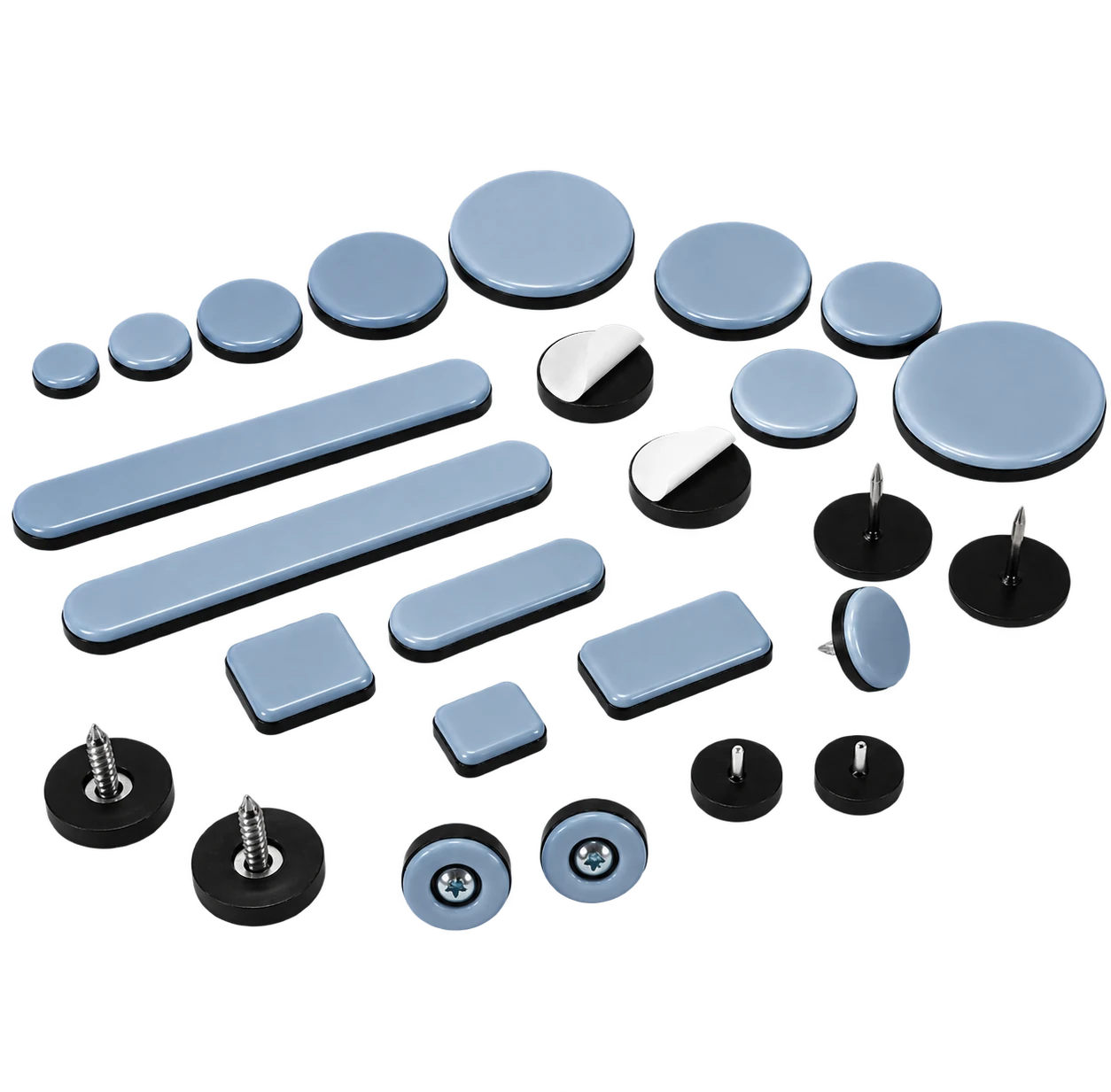
The yiHom PTFE furniture glide range uses a PTFE sliding surface with TPU and foam backing; thickness varies by model. Its catalog includes self-adhesive, screw-hole and nail-on formats. Compare the selected complete model, including its backing and mounting arrangement, rather than treating it as a solid piece of PTFE.
As general category context, manufacturer Dr. Dietrich Müller describes PTFE and felt furniture glides in adhesive and mechanical attachment formats. Those examples explain the categories; their individual specifications do not describe yiHom products.
| Buying question | PTFE glide | Felt pad or felt-faced attachment |
|---|---|---|
| What touches the floor? | A PTFE sliding surface | A textile felt layer |
| What should the sample check? | Movement, surface marking, attachment and wear in the intended use | Movement, surface marking, attachment and condition of the felt layer |
| What needs specifying? | Contact size, complete construction and mounting method | Contact size, felt construction and mounting method |
| Can floor suitability be assumed? | Confirm for the selected floor and model | Confirm for the selected floor and model |
Check the floor specification before choosing the pad
A description such as “hard floor” is not a complete application brief. Record the flooring product or finish where known, the furniture leg material and how the item will be moved. Tell the supplier whether the furniture is repositioned occasionally or moved frequently during normal use.
For example, Quick-Step's laminate floor care guidance recommends suitable protection such as felt or soft plastic under furniture feet and highlights dust, sand and grit as sources of scratches. This advice applies to the flooring discussed there; it is not an endorsement of a particular yiHom glide.
Use the guidance for your actual floor as an input to selection. If it calls for a particular contact material, resolve that requirement before approving another option. A glide sample that feels easy to move has answered only one part of the purchasing question.
Decide how much movement the furniture should allow
Describe the desired behavior in plain terms. Should a dining chair move readily when a user sits down? Should a display stand stay in its assigned position during ordinary use? Is the request for routine furniture movement or for a separate moving aid used only during relocation?
PTFE glides are a candidate to evaluate when easier movement is part of the brief. They should not be selected as an anti-slip component without evidence for that use. Felt is also used on furniture that moves, so do not assume a felt face will keep an item stationary.
Test the candidate attachment on the intended furniture with a representative load agreed for the evaluation. Record both ease of movement and unwanted movement. This is a buyer's comparison method, not a published load rating or certified test for either material.
Match the contact size and attachment to the leg
Measure the usable area at the end of the furniture leg. A pad that overhangs the foot or cannot sit flat needs a different size, shape or attachment arrangement. For angled or irregular legs, include a photograph and drawing rather than selecting by furniture type alone.
yiHom lists round PTFE sizes from Ø20 to Ø100 mm, along with square, strip and oval options. Screw-hole models are listed at Ø22, Ø30 and Ø38 mm; nail-on models at Ø20 and Ø22 mm. These are catalog dimensions, not a statement that every size fits every leg or carries the same load.
Choose the mounting arrangement as a separate decision. Provide the leg material, available mounting area and whether a fastener is acceptable. Ask the supplier to confirm the selected construction and any installation requirements before approving samples.
Compare samples using the same brief
Keep the furniture, flooring and evaluation conditions consistent when comparing PTFE and felt. Changing the mounting method, contact size and floor at the same time makes the result difficult to interpret.
Record these observations for each sample:
- How the attachment fits the furniture foot and whether its contact face sits as intended.
- How the furniture starts moving, continues moving and stops during the intended use.
- Whether movement or noise is acceptable to the buyer.
- Any visible marking on the floor or change to the contact surface.
- Whether the attachment shifts, loosens or shows wear during the agreed evaluation.
- How the contact surface can be inspected and maintained.
Agree on the duration, loading conditions and acceptance criteria with the relevant supplier. Do not convert an informal sample comparison into a scratch-proof, lifetime or universal-compatibility claim.
Common purchasing questions
Are PTFE glides always better than felt pads?
No single result applies to every floor, load and furniture design. PTFE is worth evaluating where sliding behavior is important; felt may be specified by a flooring manufacturer or selected for a particular furniture assembly. Match the candidate to the application and compare complete samples against agreed requirements.
Does yiHom supply the felt pads described here?
This comparison explains felt as an alternative category; it is not a standalone yiHom felt-pad catalog. yiHom's PVC furniture leg caps have felt-bottom options, which are a different assembly. For a separate felt-pad requirement, confirm product availability and construction rather than assuming it from this article.
Prepare the product comparison for an RFQ
Send the floor details, leg dimensions, intended movement, mounting preference and target quantity. Include any floor-care restrictions and the sample criteria that matter to your customer.
Browse the PTFE glide specifications and formats, then request furniture glide samples or a quotation. The right choice is the construction that meets your defined furniture and floor requirements.